The True Nature of Heaven: A Present Reality, Not a Future Reward
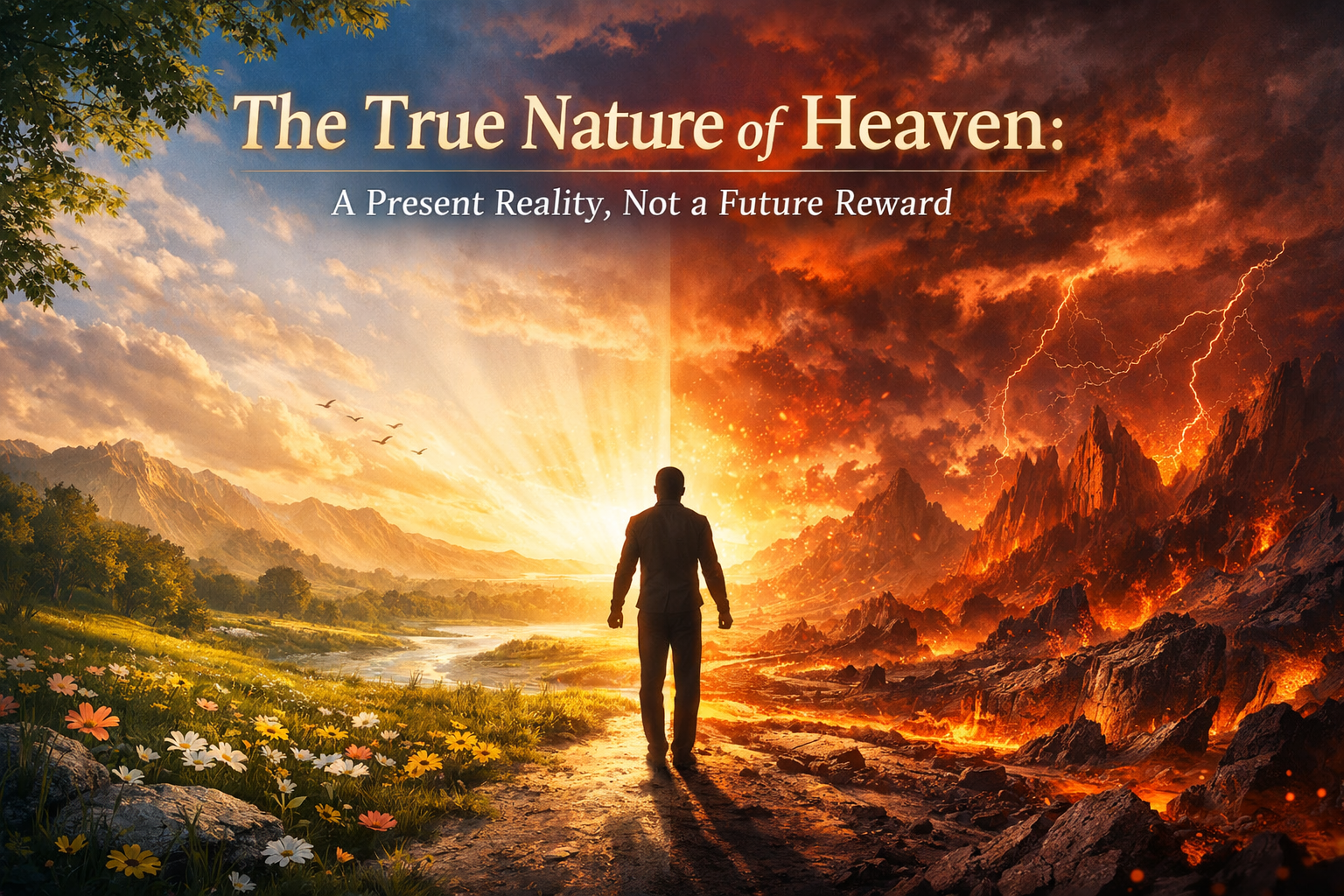
For generations, heaven has often been described as a distant destination—something to be reached after death, earned through correct belief or moral performance. This view places fulfillment perpetually in the future, encouraging people to endure the present while waiting for a promised reward. Yet a deeper examination reveals a radically different understanding: heaven is not a place we go later, but a reality we enter now.
Scripture itself points to this truth. Jesus states plainly:
“The kingdom of God is within you.”
(Luke 17:21)
This declaration reframes heaven entirely. It is not in the clouds, not postponed until the end of life, and not dependent on a future event. Heaven exists within the present moment and within the individual.
Heaven as a Decision, Not a Destination
Heaven is not something we arrive at—it is something we choose. It is created in real time through how we think, how we act, how we live, and how we love. In the same way, hell is not a fiery realm awaiting judgment, but a state of being formed by fear, resentment, apathy, and harm.
Every moment becomes a canvas. Each decision contributes either to a life that feels expansive, meaningful, and alive—or to one that feels empty, constrained, and disconnected. Heaven and hell are not imposed from outside; they are built from within.
This perspective shifts responsibility back to where it belongs: the present. Rather than asking, “What will happen to me someday?” the more urgent question becomes, “What am I creating right now?”
The Trap of Future-Oriented Belief
One of the most subtle dangers of future-focused belief systems is that they delay transformation. When heaven is framed as a reward that comes later—after death or after a long-anticipated event—people are encouraged to wait instead of act.
This mindset weakens personal agency. It suggests that fulfillment, peace, and wholeness are inaccessible now, and that one must endure life rather than fully inhabit it. The result is often passivity, resignation, or moral bargaining—living not from conviction, but for compensation.
Even concepts like the “second coming” can be misunderstood when interpreted solely as external events. Reframed, they point to something far more immediate: an inner awakening. A rising from emotional, moral, or spiritual apathy. A return to presence, responsibility, and conscious living.
Freedom Without Deferred Rewards
When external rewards are removed, something profound happens: responsibility becomes unavoidable. Without the promise of future prizes—no gold stars, no mansions, no delayed validation—the individual must face an honest question:
Who do I choose to be if this moment is all I have?
This question strips away performance and pretense. Character is no longer shaped by expectation, tradition, or fear of consequence, but by deliberate choice. Meaning is not assigned later; it is created now.
This freedom is not nihilistic. It is deeply ethical. It calls for integrity not because it is rewarded, but because it is right. It invites love not as obligation, but as expression.
The Divine Spark and the Call to Create
Life is not a script handed down fully written. It is a canvas. The breath of life, free will, and the capacity to observe and assign meaning are gifts already given. What appears on the canvas depends on the artist.
To live as if heaven is present is to take ownership of this creative power. It is to recognize that meaning is not discovered somewhere else—it is authored here. Through compassion, intentional action, creativity, and courage, heaven becomes visible, tangible, and lived.
Living Heaven Now
The call is not to wait, but to act.
Stop postponing wholeness.
Stop trading presence for promises.
Stop surrendering the power of now for the hope of later.
Heaven is within you.
So act like it.
Create it.
Live like it.
When heaven is recognized as a present reality, life itself becomes sacred ground—not someday, but today.