The True Meaning of the “Den of Robbers” and the Spiritual Conflict at the Temple
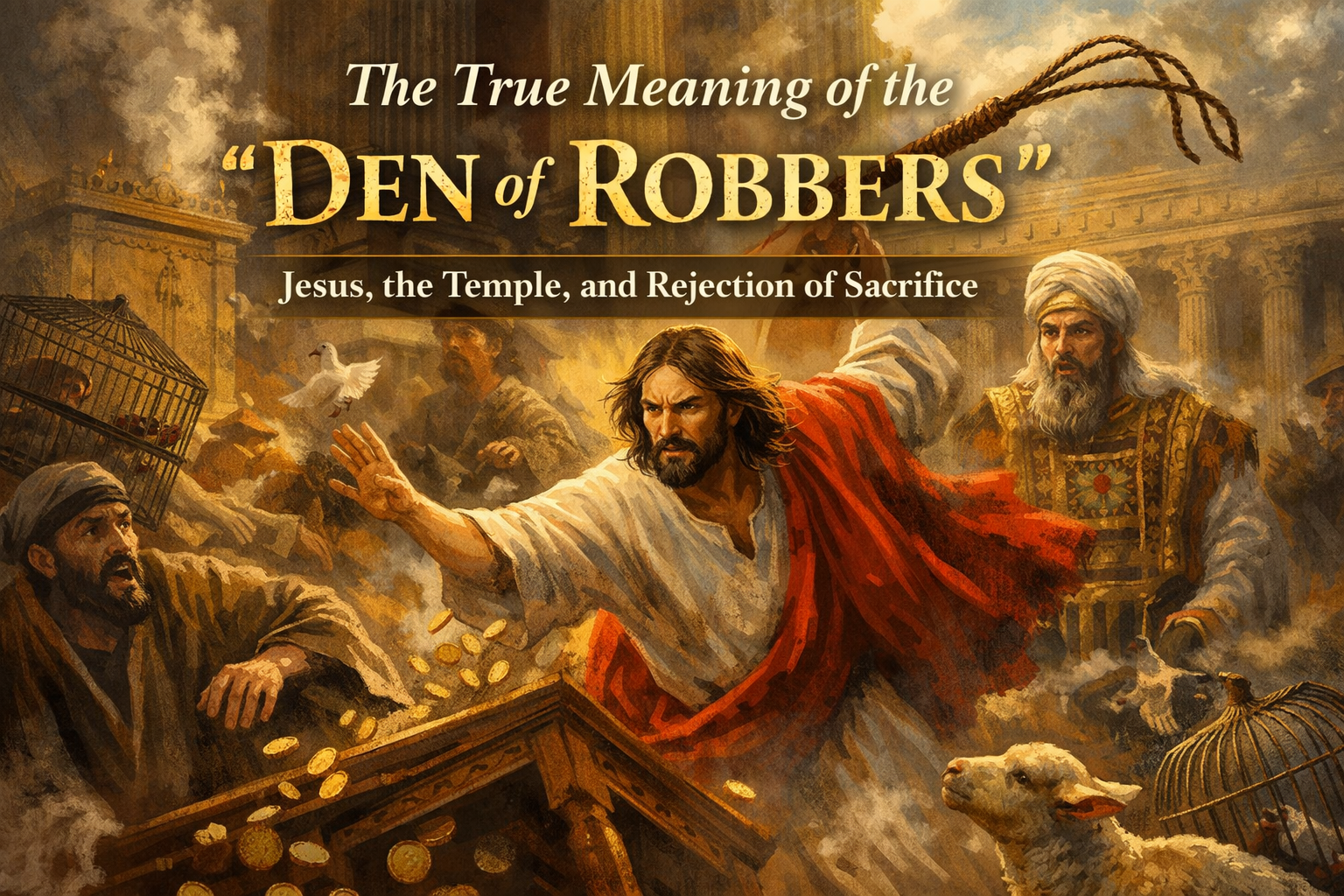
One of the most dramatic moments in the Gospel accounts is Jesus’s confrontation at the temple, where he overturns tables, drives people out, and declares that the house of God has been turned into a “den of robbers.” This episode is often interpreted as a rebuke of dishonest money changers. However, a deeper examination of scripture, history, and context suggests that Jesus’s actions represented a far more radical rejection: a complete condemnation of the temple’s blood-sacrifice system itself.
This interpretation reframes the event not as a critique of corruption within the system, but as a rejection of the system altogether.
A House of Prayer, Not a Sacrificial Marketplace
In Mark 11:15–17, Jesus enters the temple and disrupts its operations, declaring:
“Is it not written, My house shall be called a house of prayer for all nations? But you have made it a den of robbers.”
The phrase “house of prayer” is central. It reflects a vision of the temple as a place of spiritual communion rather than ritualized slaughter. This statement aligns with a long-standing prophetic critique of sacrifice-focused worship and points to a deeper theological disagreement about what God truly desires from humanity .
Jeremiah’s Forgotten Context
Jesus’s words directly quote Jeremiah 7:11, but the surrounding passage is rarely examined. In Jeremiah 7:22–23, God declares:
“For I did not speak to your fathers or command them concerning burnt offerings and sacrifices, but this command I gave them: Obey my voice.”
This passage challenges the assumption that blood sacrifice was ever the primary requirement of God. Instead, obedience, justice, and faithfulness are emphasized. By quoting Jeremiah, Jesus was invoking a prophetic tradition that directly contradicts the idea that sacrificial rituals were the foundation of divine favor .
The Temple as an Economic System
By the first century, the temple had evolved into a massive economic operation. Worshippers were required to bring animals without blemish, often purchased on-site, creating a controlled marketplace. The system ensured that wealth flowed upward to the priestly class while placing heavy burdens on ordinary people.
Numbers 18 outlines how offerings—including grain, oil, wine, and livestock—were designated as a perpetual entitlement for priests and their families. These “holy contributions” formed the backbone of a religious economy that benefited a select few while being justified as divine command.
Jesus’s disruption targeted this structure itself. Driving out sellers and overturning tables symbolized a rejection of a system that merged religious authority with economic exploitation .
Rejecting Blood Sacrifice
Rather than merely opposing unethical practices, Jesus’s actions suggest a rejection of blood sacrifice as a valid expression of worship. His vision of God’s kingdom emphasized repentance, mercy, forgiveness, and inner transformation over ritualized violence.
This understanding aligns with earlier prophetic voices such as Hosea 6:6:
“For I desire mercy and not sacrifice, the knowledge of God rather than burnt offerings.”
The temple confrontation, when read through this lens, represents a climactic stand against a theology that portrayed God as appeased by blood rather than moved by justice and compassion.
A Spiritual Revolution
Jesus’s declaration that the temple had become a “den of robbers” was not an attack on commerce alone—it was an indictment of a religious system that claimed divine authority while extracting wealth, power, and obedience from the people.
By invoking Jeremiah and redefining the temple as a house of prayer, Jesus called for a return to authentic spiritual relationship with God—one rooted in obedience, humility, and love rather than sacrifice and fear.
This perspective challenges long-held assumptions and invites a deeper examination of scripture itself. The temple incident stands not only as a moment of confrontation, but as a revelation of what true worship was always meant to be.
I