Jesus and Paul: Distinguishing the Teachings of Christ from Later Doctrine
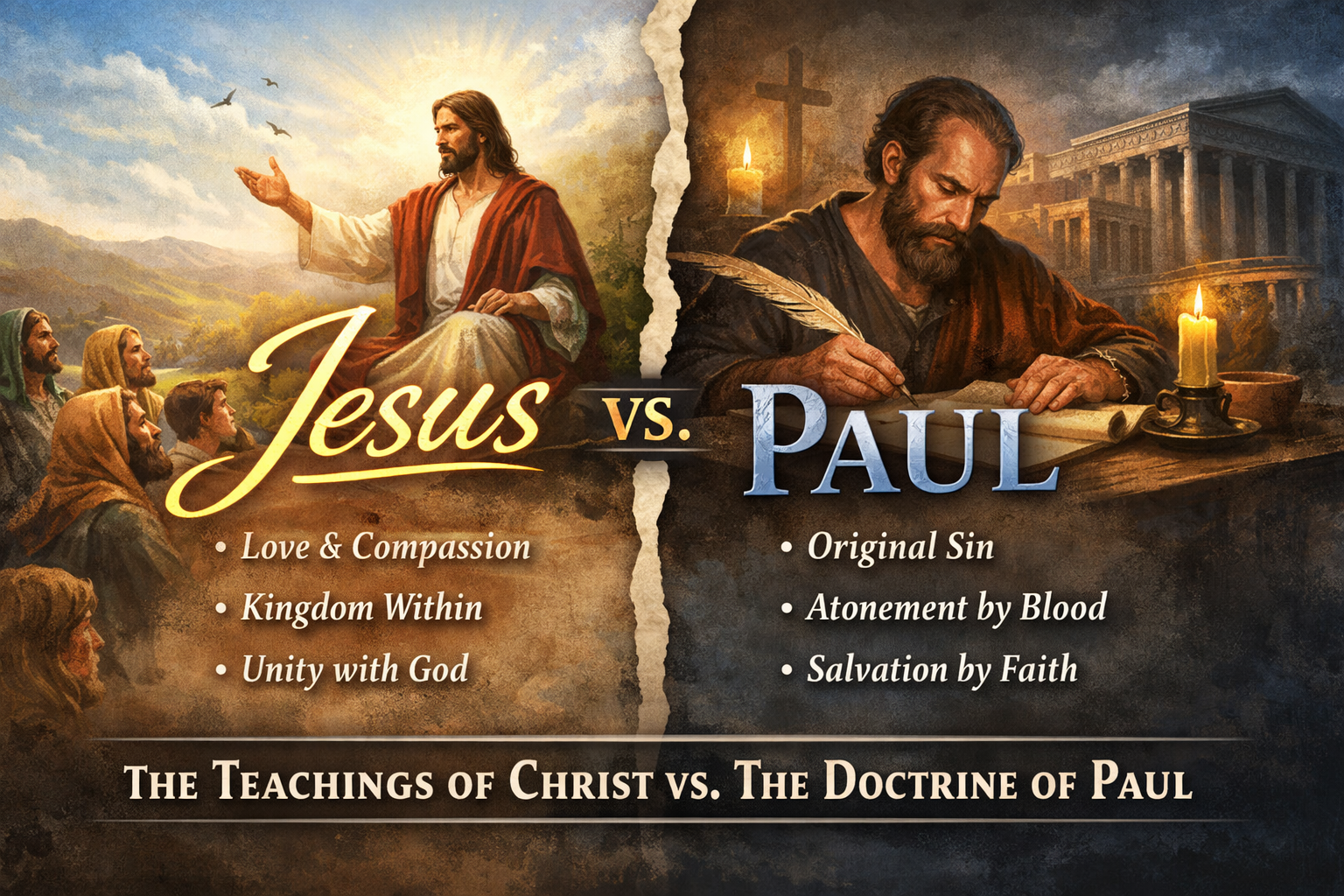
For many believers, Christianity is presented as a single, unified system of belief derived seamlessly from Scripture. Yet a closer reading of the New Testament reveals something more complex: a distinction between the teachings attributed directly to Jesus and the theological framework developed later, most prominently in the writings of Paul.
Questioning biblical inerrancy makes this distinction visible. Rather than weakening faith, it allows for a deeper and more honest examination of how Christian doctrine developed—and how some central ideas commonly associated with Christianity may not originate with Jesus himself.
Divine Truth, Human Authors, and Theological Development
The Bible contains profound spiritual insight, yet it was written, edited, and compiled by human beings across generations. Treating every word as equally authoritative obscures the reality that not all voices in Scripture are saying the same thing.
Jesus taught primarily through parables, lived example, and direct spiritual instruction. Paul, by contrast, wrote letters addressing specific communities, conflicts, and theological disputes decades later. Recognizing this difference in context is essential when evaluating their messages.
Jesus’ Core Message: Unity, Love, and the Kingdom Within
In the Gospels, Jesus consistently emphasizes:
Unity with God
“I and the Father are one.” (John 10:30)
“The Father is in me and I am in the Father.” (John 14:10)
Direct relationship, not mediation
“The kingdom of God is within you.” (Luke 17:21)
“Call no one on earth your father, for you have one Father.” (Matthew 23:9)
Love as the defining command
“Love the Lord your God… and love your neighbor as yourself.” (Matthew 22:37–40)
“By this everyone will know that you are my disciples, if you love one another.” (John 13:35)
Jesus speaks little about legal justification, inherited guilt, or salvation through belief in doctrinal formulas. His focus is transformation of the heart, lived compassion, and awakening to divine presence.
Paul’s Theology: Separation, Sin, and Sacrificial Atonement
Paul’s writings introduce a different framework, emphasizing:
Human separation from God through sin
“All have sinned and fall short of the glory of God.” (Romans 3:23)
Salvation through belief in Jesus’ death and resurrection
“If you confess with your mouth that Jesus is Lord and believe in your heart that God raised him from the dead, you will be saved.” (Romans 10:9)
Blood sacrifice as the mechanism of redemption
“Without the shedding of blood there is no forgiveness of sins.” (Hebrews 9:22, reflecting Pauline theology)
Paul frames the crucifixion as a transactional event—an atoning sacrifice required to satisfy divine justice. This emphasis on guilt, payment, and justification by belief contrasts sharply with Jesus’ teachings on forgiveness freely given and reconciliation through love.
Where Jesus and Paul Diverge
1. Nature of Sin
Jesus: Focuses on healing, restoration, and forgiveness without prerequisites (Luke 15:11–32; John 8:1–11).
Paul: Emphasizes universal guilt and legal condemnation (Romans 5:12).
2. Path to God
Jesus: Teaches direct access to the Father (Matthew 6:6; John 14:20).
Paul: Positions belief in Jesus’ sacrificial death as the primary requirement (Galatians 2:16).
3. Kingdom of God
Jesus: Describes the Kingdom as present, internal, and experiential (Luke 17:21).
Paul: Focuses more on future salvation and deliverance from judgment.
4. Transformation
Jesus: Calls for inner change expressed through love and action (Matthew 7:16–20).
Paul: Centers transformation on theological belief and spiritual status.
Gospel Variations and the Question of Authority
The Gospels themselves show signs of human authorship through contradictions and variations. One clear example is the conflicting accounts of Judas Iscariot’s death:
Matthew 27:3–8: Judas hangs himself; the priests buy the field with blood money.
Acts 1:18–19: Judas buys the field himself and dies by falling and bursting open.
These discrepancies demonstrate that the New Testament is not a single, unified narrative but a collection of perspectives. Recognizing this helps readers question why later theological interpretations—especially Pauline ones—are often treated as equal or superior to Jesus’ own words.
Releasing Inerrancy to Recover Jesus’ Voice
When biblical inerrancy is treated as unquestionable, Paul’s theology often overrides Jesus’ teachings. Releasing that assumption allows readers to ask a crucial question:
What did Jesus actually teach—and how does that differ from what was later taught about him?
This shift invites a return to the heart of Jesus’ message: divine love, unity with God, forgiveness without condition, and transformation through lived compassion rather than fear or shame.
Conclusion
Christian doctrine did not emerge fully formed from Jesus’ teachings alone. It developed over time, shaped by historical circumstances, theological debates, and institutional priorities. Distinguishing between Jesus’ message and Paul’s interpretations does not diminish faith—it clarifies it.
By reading Scripture critically and attentively, believers can move beyond inherited assumptions and rediscover a vision of faith rooted not in guilt or separation, but in love, unity, and direct relationship with God.