Salvation According to Jesus: Repentance, Obedience, and Mercy
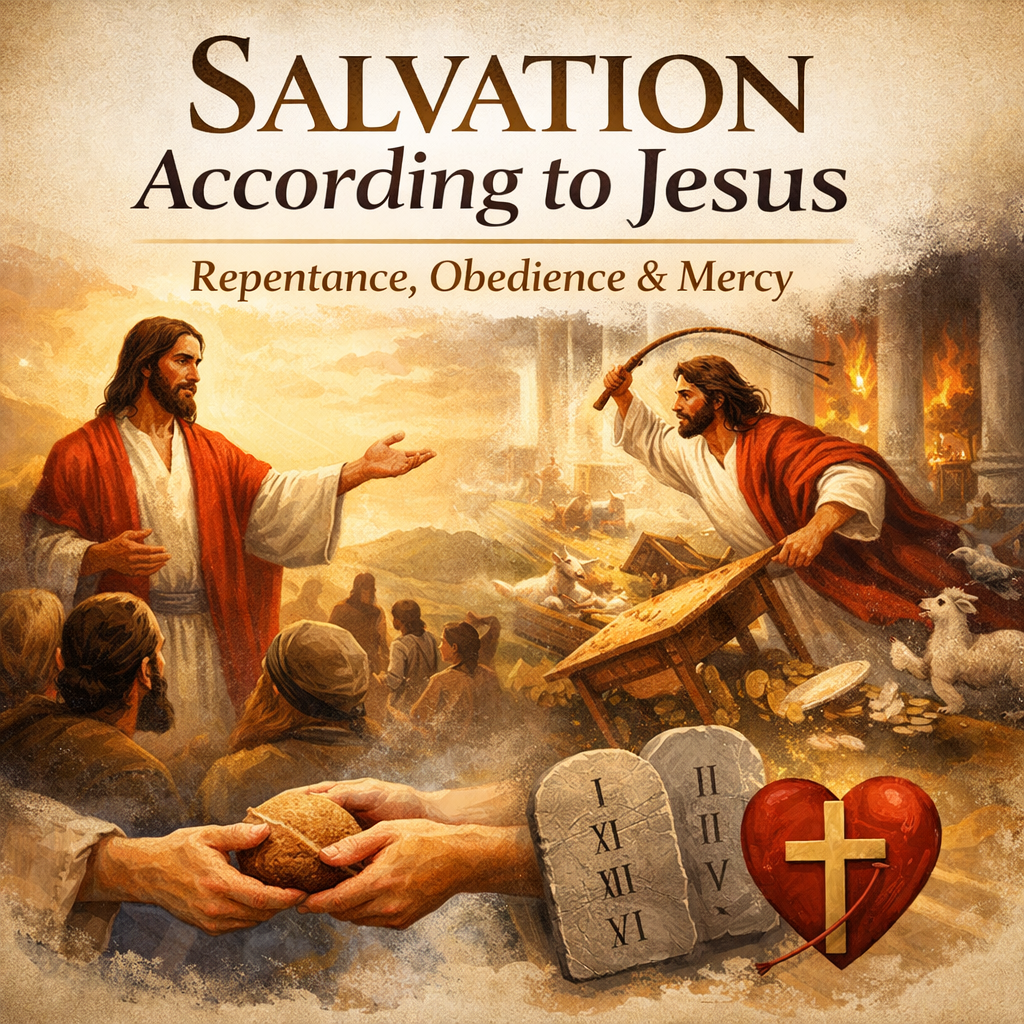
Discussions about salvation often revolve around belief, confession, and theological formulas. Yet when examining the teachings attributed directly to Jesus, a strikingly consistent message emerges—one centered on repentance, obedience, and lived righteousness rather than ritual or verbal affirmation alone.
Repentance and Forgiveness as the Foundation
At the heart of Jesus’s teaching on salvation is a simple but demanding principle: repentance leads to forgiveness. Salvation is portrayed not as a transactional exchange, but as a relational response to humility and moral transformation. A repentant heart, aligned toward God, is presented as sufficient for reconciliation and justification.
This framing emphasizes responsibility and inward change rather than external mechanisms. Forgiveness flows from repentance, not from ceremonial acts or symbolic substitutes.
Rejection of Sacrificial Religion
A recurring theme in Jesus’s teachings is the rejection of sacrifice as a prerequisite for divine forgiveness. This perspective challenges systems that portray God as requiring blood or ritual offerings to extend mercy.
Jesus’s words reinforce this position clearly:
“I desire mercy, not sacrifice.” (Matthew 9:13; Hosea 6:6)
This declaration underscores a moral priority: compassion outweighs ritual observance. The cleansing of the temple—where animals intended for sacrifice were driven out—further reinforces the rejection of sacrificial systems as spiritually hollow when detached from justice and mercy.
Keeping the Commandments and Eternal Life
When directly asked how one may inherit eternal life, Jesus gives a direct and unambiguous answer:
“If you want to enter eternal life, keep the commandments.” (Matthew 19:17)
The commandments referenced are not abstract rituals but ethical imperatives, particularly those governing how one treats others. These include prohibitions against murder, theft, and falsehood, culminating in the command:
“Love your neighbor as yourself.” (Leviticus 19:18; Matthew 19:19)
Salvation, as presented here, is inseparable from ethical action.
The Greatest Commandments
Jesus distills the entirety of divine law into two interconnected commands:
Love the Lord your God with all your heart, soul, mind, and strength
(Deuteronomy 6:5)Love your neighbor as yourself
(Leviticus 19:18)
According to Jesus, all law and prophetic teaching rest upon these two principles (Matthew 22:37–40). They form both the moral framework and the pathway toward eternal life.
Words Versus Actions
A critical tension highlighted in the teachings is the inadequacy of confession without obedience. Jesus explicitly warns that verbal declarations alone are insufficient:
“Not everyone who says to me, ‘Lord, Lord,’ will enter the kingdom of heaven.” (Matthew 7:21)
The measure of faith is action—especially acts of mercy. Those who fail to care for the hungry, the thirsty, and the vulnerable are portrayed as failing to serve God himself (Matthew 25:31–46).
Righteous conduct, not religious language, becomes the defining criterion.
A Call to Lived Faith
The consistent message across these teachings is clear: salvation is not secured by belief alone, ritual compliance, or spoken allegiance. It is revealed through repentance, obedience to God’s commandments, and tangible expressions of love and mercy toward others.
In this vision, faith is not merely held—it is practiced. Eternal life is not promised to those who speak correctly, but to those who live rightly.