Jesus’s Teachings and the Question of Atonement
Mercy, Forgiveness, and the Heart of the Gospel
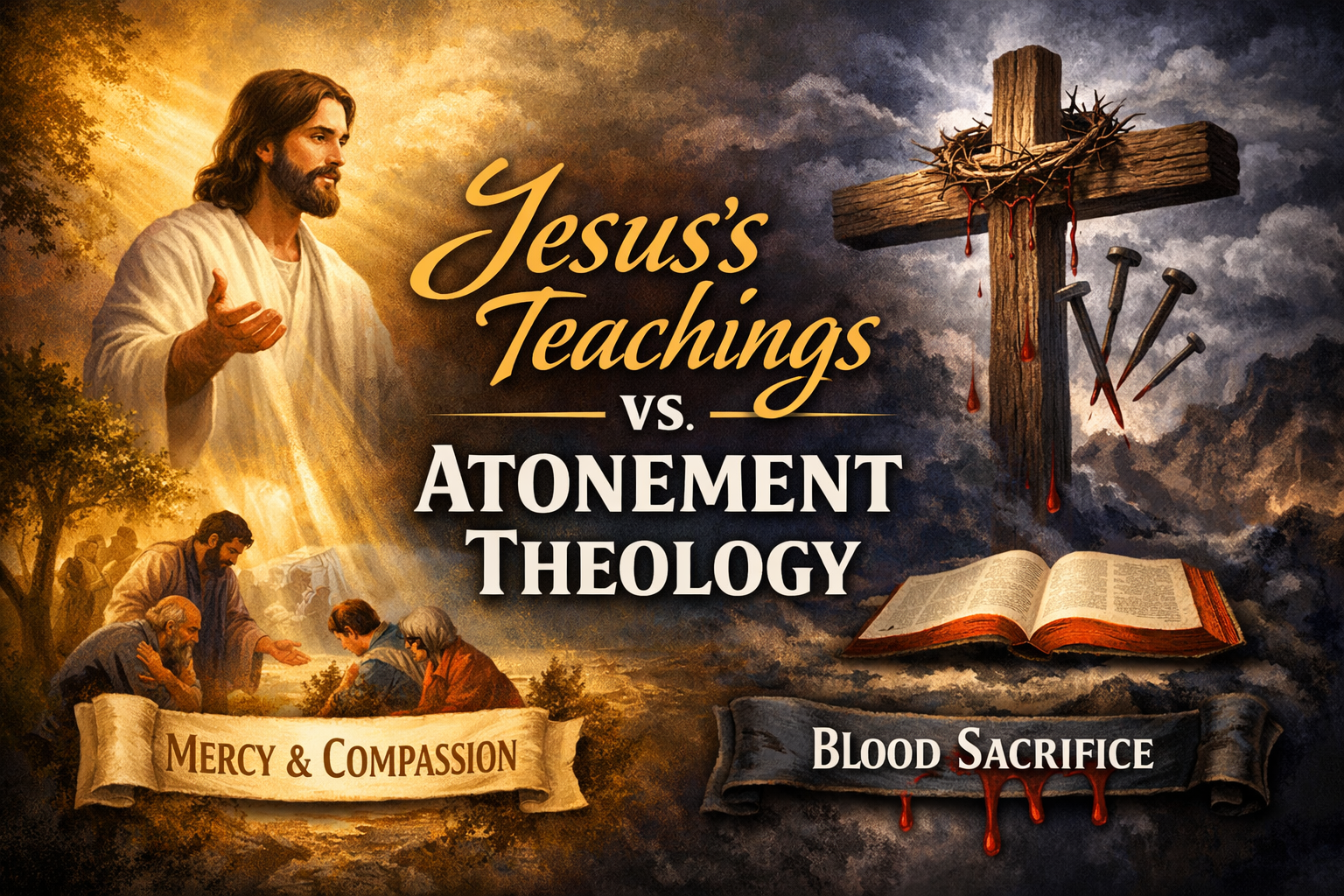
A recurring tension within Christian theology centers on a fundamental question: What was the core message Jesus intended to convey? Was it primarily about belief in a sacrificial death, or was it about a transformed way of living marked by mercy, forgiveness, and service to others?
This tension becomes especially clear when comparing the ethical teachings attributed directly to Jesus with later theological frameworks that emphasize atonement through blood sacrifice. Examining this contrast invites a deeper reflection on the nature of God, forgiveness, and human responsibility.
The Central Emphasis of Jesus’s Teachings
The teachings attributed directly to Jesus consistently emphasize inner transformation and outward compassion rather than ritual sacrifice. Central themes include radical forgiveness, mercy, humility, and active care for others.
One of the clearest expressions of this ethic is the call to limitless forgiveness:
“I do not say to you up to seven times, but up to seventy times seven.”
— Matthew 18:22
This command suggests that forgiveness is not conditional or scarce, but abundant and ongoing. If humans are instructed to forgive without limit, the implication is that God’s mercy operates on an even greater scale.
Jesus repeatedly reinforces the idea that God desires inner sincerity rather than ritual acts. Quoting the prophetic tradition, he affirms:
“I desire mercy and not sacrifice.”
— Hosea 6:6; echoed in Matthew 9:13
Similarly, Jesus stresses that a “broken and contrite heart” matters more than offerings or religious performance (cf. Psalm 51:17). The consistent message is that transformation of the heart, not bloodshed, is central to righteousness.
Ethical Action as the Measure of Faith
Jesus’s teachings do not separate belief from behavior. Compassionate action is presented as essential, not optional. This is especially evident in teachings about caring for the marginalized:
“I was hungry and you gave me food, I was thirsty and you gave me drink, I was a stranger and you welcomed me, I was in prison and you visited me.”
— Matthew 25:35–36
Here, identification with “the least of these” becomes the defining measure of faithfulness. Verbal confession alone is insufficient if it is not accompanied by love in action. Jesus warns against calling him “Lord” without living out the values he taught (cf. Matthew 7:21).
Prophetic Roots: A Longstanding Critique of Sacrifice
The ethical thrust of Jesus’s message stands firmly within the tradition of the Hebrew prophets, many of whom openly challenged sacrificial systems. Prophets such as Isaiah, Jeremiah, Ezekiel, and Malachi consistently criticized ritual offerings divorced from justice and compassion.
Isaiah declares:
“What to me is the multitude of your sacrifices? says the LORD… I do not delight in the blood of bulls.”
— Isaiah 1:11
Jeremiah echoes this critique, emphasizing obedience and justice over offerings (Jeremiah 7:22–23). These prophetic voices argue that sacrifice was never the ultimate goal; righteousness, mercy, and faithfulness were.
Jesus’s teachings appear to continue and intensify this prophetic trajectory rather than reverse it.
A Theological Tension: Sacrifice or Mercy?
A theological tension arises when the death of Jesus is framed as a necessary blood sacrifice demanded by God for forgiveness. This framework suggests that divine forgiveness requires violence and death to be satisfied.
In contrast, Jesus’s teachings consistently portray God as already merciful, calling people to practice forgiveness rather than to believe that forgiveness has been purchased on their behalf. The emphasis shifts from appeasing God to transforming human hearts.
This raises a profound question:
If God requires humans to forgive endlessly, why would God require blood in order to forgive?
Re-centering the Message on Transformation
Another concern highlighted in this reflection is the tendency to focus almost exclusively on the birth and death of Jesus while neglecting the substance of his life and teachings. When the ethical teachings—the “red-letter” words—are marginalized, faith risks becoming abstract and disconnected from lived compassion.
Jesus’s message repeatedly calls for a way of life defined by love of neighbor, care for the vulnerable, humility, and peacemaking:
“Love your enemies and pray for those who persecute you.”
— Matthew 5:44
This vision is demanding, practical, and deeply transformative. It cannot be reduced to belief alone.
Forgiveness as a Human Calling
At the heart of Jesus’s teaching is a radical reorientation of forgiveness. Rather than portraying God as needing to be convinced to forgive, Jesus portrays God as already merciful and calls humans to reflect that mercy in their relationships.
Forgiveness, in this view, is less about satisfying divine justice and more about healing human hearts and communities. Transformation, not transaction, becomes the goal.
Conclusion: Recovering the Heart of the Gospel
Re-examining Jesus’s teachings alongside the prophetic tradition invites a renewed focus on mercy, compassion, and ethical living. The consistent scriptural witness—from the prophets to the teachings of Jesus—suggests that God desires justice, mercy, and humility rather than blood sacrifice.
This perspective challenges believers to move beyond mere confession toward embodied love: feeding the hungry, forgiving enemies, visiting the imprisoned, and caring for the forgotten. In doing so, the heart of Jesus’s message comes into clearer focus—not as a doctrine to affirm, but as a way of life to live.