The Pauline Paradox: Deconstructing Christian Origins
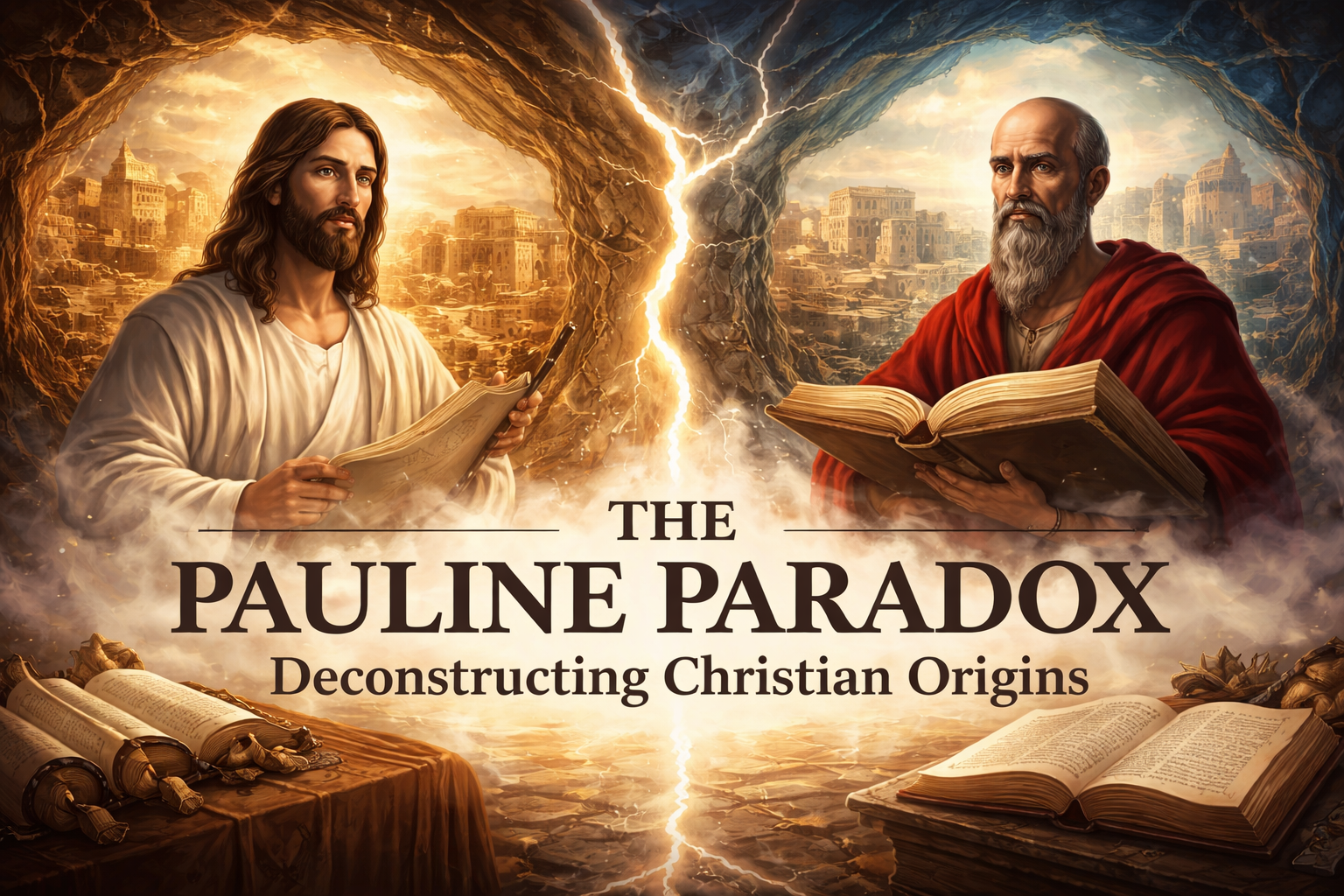
Modern Christianity is often presented as a unified faith that traces its beliefs directly back to the teachings of Jesus. Yet a closer examination of early Christian history reveals a far more complex and contested origin story—one marked by deep internal conflict, competing theologies, and a decisive shift in authority. At the center of this tension lies a paradox: the dominant form of Christianity practiced today appears to be shaped less by the teachings of Jesus and his earliest followers, and more by a later theological reinterpretation that ultimately prevailed.
A Hidden Conflict at Christianity’s Foundation
The traditional narrative suggests a smooth transition from Jesus’ teachings to the formation of Christian doctrine. However, historical evidence points instead to an intense struggle over what the “true message” of the movement was meant to be. Early Christianity was not monolithic; it was divided between at least two competing visions—one rooted in continuity with Jewish law and practice, and another that radically redefined salvation, authority, and religious identity.
This conflict was not peripheral. It represented a fundamental disagreement over the nature of faith itself: whether adherence to divine law remained essential, or whether belief alone was sufficient. The resolution of this struggle would shape the theological foundation of Christianity for centuries to come.
Law Versus Faith: Two Incompatible Visions
One vision emphasized continuity. In this understanding, Jesus was seen as affirming and fulfilling the existing religious law rather than abolishing it. His earliest followers maintained traditional practices and understood the movement as a reform within Judaism, not a departure from it. Obedience, ethical conduct, and lived faith were inseparable.
The opposing vision proposed a dramatic theological break. Here, salvation was framed as dependent on belief alone, independent of religious law or ritual observance. The law was no longer viewed as binding, and faith became the singular requirement for redemption. This reinterpretation fundamentally altered the identity of the movement, transforming it from a law-affirming tradition into a law-transcending one.
These two approaches were not minor variations; they were mutually exclusive frameworks that could not be easily reconciled.
Authority Without Direct Continuity
A key issue underlying this divide was authority. The law-affirming tradition derived its legitimacy from direct continuity with Jesus’ life, practices, and immediate circle. The law-free theology, by contrast, claimed authority through revelation rather than personal association. Despite lacking firsthand experience of Jesus’ ministry, this later interpretation ultimately gained dominance within the emerging canon of Christian writings.
As a result, texts promoting belief over law came to occupy a central position in Christian scripture, while voices emphasizing continuity with Jesus’ lived example were marginalized or excluded altogether.
Suppressed Alternatives and Lost Traditions
Historical records indicate that early Christian communities existed which explicitly rejected the law-free theology and adhered instead to the original, law-observant teachings. These groups viewed the later reinterpretation as a distortion of the original message and continued to practice faith as a lived, ethical, and communal discipline rooted in tradition.
Over time, however, these alternative expressions of Christianity faded from prominence. The theological framework that emphasized belief alone prevailed, shaping doctrine, scripture, and institutional authority. What survived was not necessarily the earliest version of the faith, but the one that proved most adaptable and influential.
A Provocative Question for Modern Faith
The outcome of this early struggle raises an unavoidable question for contemporary believers: which version of the message is being followed today? Is it the vision centered on fulfilling divine law through lived practice, or the one that redefined faith as belief independent of law?
Understanding Christianity’s origins requires acknowledging that its foundations were contested, shaped by power struggles and theological disagreements rather than unanimous agreement. Recognizing this complexity does not diminish faith—but it does challenge the assumption that modern doctrine represents a seamless continuation of Jesus’ original message.
Instead, it invites reflection on how history, interpretation, and authority have shaped what Christianity ultimately became—and what it may have left behind.