Comparative Historical Evidence: Jesus, Caesar, and Alexander
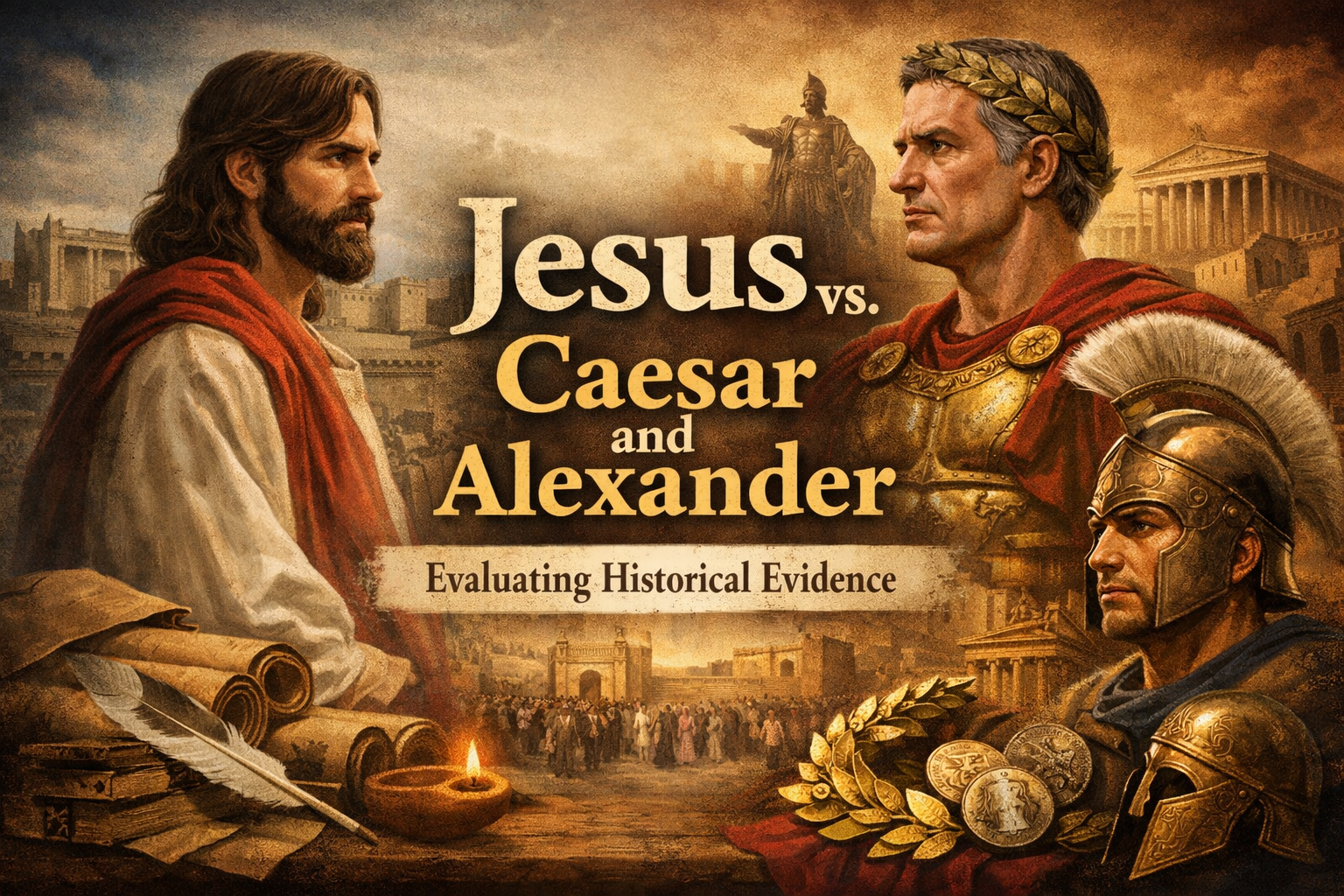
Claims are often made that the historical evidence for Jesus of Nazareth is stronger than that for figures such as Julius Caesar or Alexander the Great. While such statements may sound persuasive, a careful examination of historical methodology shows that this comparison does not hold up under scrutiny. The issue is not whether Jesus existed, but whether the type and quality of evidence for these figures is comparable.
This article explores the nature of the surviving evidence for Jesus, contrasts it with the evidence for Caesar and Alexander, and explains why equating these cases misrepresents how historians evaluate the past.
Understanding Historical Evidence
Historians weigh evidence based on several key factors:
Proximity in time to the events described
Directness of the testimony
Independence of sources
Material and archaeological corroboration
Not all historical figures are preserved equally in the record. Differences in literacy, political power, social status, and record-keeping institutions dramatically affect what survives.
The Evidence for Jesus of Nazareth
The historical case for Jesus rests on a relatively small and indirect body of evidence. Surviving sources include:
A limited number of brief references in non-Christian writings composed decades after his death
Narrative accounts found in the Gospels, which were written later, anonymously, and shaped by theological aims
These texts contain historical memory mixed with literary development and symbolic storytelling. Despite this, most historians agree that Jesus existed and that he was likely a Jewish apocalyptic preacher active in the early first century who was executed by Roman authorities following unrest connected to the Jerusalem Temple.
This conclusion is based on scholarly consensus, not on an abundance of direct contemporary records.
The Evidence for Caesar and Alexander
In contrast, the historical record for Caesar and Alexander is far more extensive and varied. It includes:
Contemporary written accounts produced by named individuals who personally knew them, traveled with them, or were officially tasked with documenting their lives
Administrative records and inscriptions
Archaeological artifacts, most notably coins minted during their lifetimes bearing their names, titles, and likenesses
These forms of evidence provide direct, contemporaneous confirmation of their existence, authority, and historical activity. Nothing comparable survives from the lifetime of Jesus.
Why Manuscript Quantity Is Not Historical Proof
A common argument suggests that the large number of surviving Gospel manuscripts strengthens the historical case for Jesus. This reasoning misunderstands how historical evidence works.
Two critical points undermine this claim:
Later copying does not increase evidentiary value
Reproducing a text many times centuries later does not provide new information about the original events. It only demonstrates the popularity or influence of the text among later communities.Most manuscripts are extremely late
The majority of surviving copies were produced hundreds of years after the events they describe, long after oral traditions had stabilized into fixed narratives.
Quantity of manuscripts reflects transmission history, not historical proximity.
Why the Comparison Fails
The evidence for Jesus is meaningful and sufficient to support the conclusion that he existed. However, it is not comparable in kind or quality to the evidence for figures like Caesar or Alexander. These leaders operated within powerful political systems that generated documentation, currency, monuments, and eyewitness records as a matter of course.
Comparing these cases as if they were historically equivalent obscures the real differences in social status, record-keeping practices, and the nature of surviving sources.
Conclusion
The question is not whether Jesus existed, but whether claims about the superiority of evidence for his life are accurate. When evaluated using standard historical criteria, the comparison between Jesus and figures such as Caesar or Alexander collapses. The evidence for Jesus is indirect, later, and literary in nature, while the evidence for Caesar and Alexander is direct, contemporary, and materially supported.
Understanding these distinctions allows for a more honest and accurate discussion of history—one that respects both the limits and the strengths of the surviving record.