Biblical Inerrancy and the Problem of Idolatry
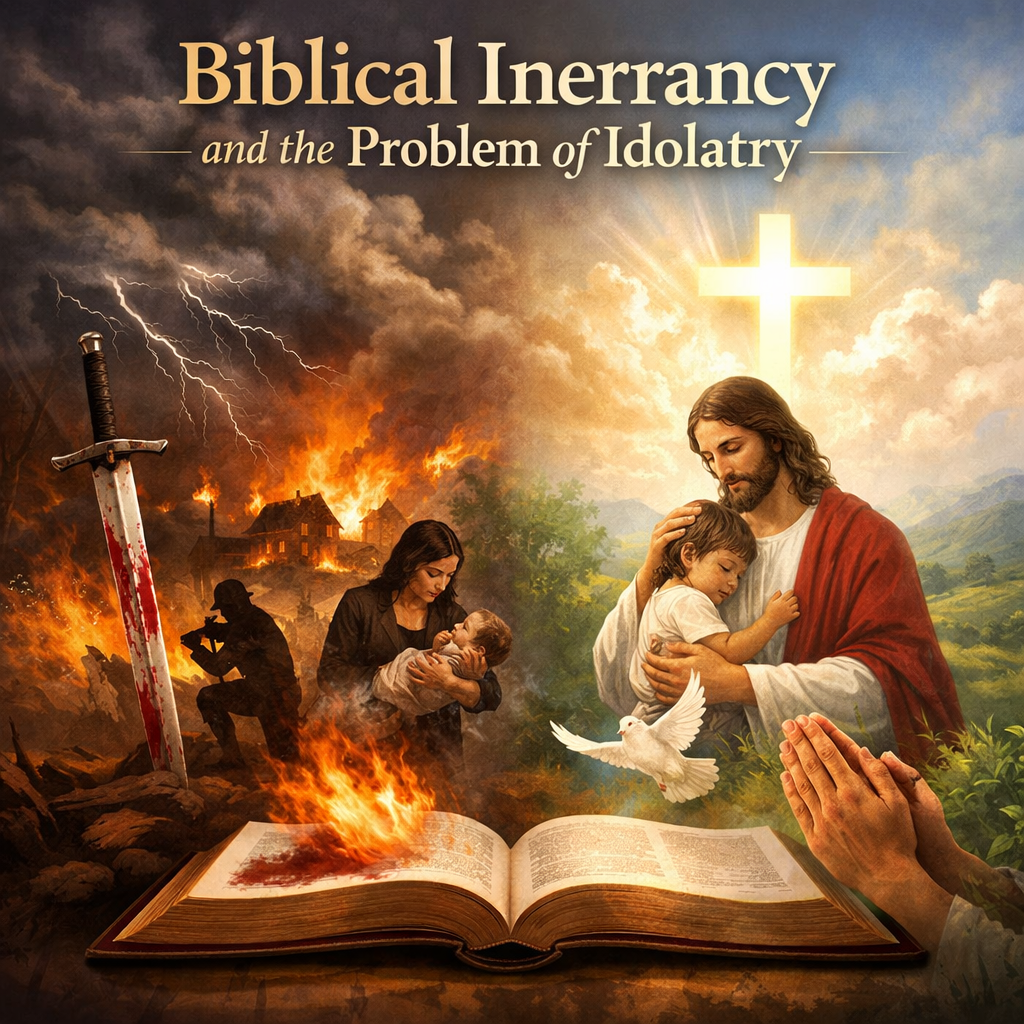
One of the most challenging questions within faith is whether treating the Bible as the literal, inerrant word of God unintentionally creates a form of idolatry. This argument does not deny that the Bible contains spiritual truth; rather, it challenges the assumption that every word within it equally reflects the nature and character of God.
At the heart of this perspective is the definition of idolatry itself: the worship of a false image of God. When divine authority is assigned indiscriminately to every passage—regardless of moral contradiction—the result may be devotion not to God, but to a constructed image shaped by human tradition, fear, and power .
A Core Contradiction Within Scripture
The central concern arises from a stark contrast between two portrayals of God found within the Bible.
Commands of Violence and Destruction
In the Old Testament, certain passages attribute commands of extreme violence to God. One of the most frequently cited examples is found in 1 Samuel 15:3, where the instruction is given to destroy an entire people group, including men, women, infants, and children, along with their animals. This depiction presents a God who sanctions genocide and the killing of children.
Such passages raise unavoidable moral questions:
If God is perfectly loving and just, how can commands of total destruction be reconciled with that nature?
The God Revealed Through Jesus
In contrast, the teachings attributed to Jesus present a radically different image of God—one centered on love, mercy, and the protection of the vulnerable.
Several teachings emphasize this character clearly:
Matthew 18:5–6 — Welcoming a child is equated with welcoming God, and harming a child is condemned in the strongest possible terms.
Matthew 18:14 — It is explicitly stated that it is not the will of God that even one child should perish.
Matthew 5:44 — Followers are commanded to love their enemies, bless those who curse them, and respond to hatred with goodness.
These teachings describe a God who values life, rejects violence, and calls for compassion even toward enemies.
The contradiction is difficult to ignore:
Does God command the slaughter of children—or declare that none should perish?
Both cannot be true simultaneously without redefining goodness itself .
The “Old Covenant” Defense Examined
A common explanation offered for this contradiction is that the violent commands belong to an earlier covenant that was later replaced. However, this raises further theological and moral concerns.
If God’s nature is unchanging, how could actions once deemed righteous later become incompatible with divine love? This explanation implies a God who once required violence against children but no longer does—a shift that undermines the idea of a consistently loving and just Creator.
Rather than resolving the contradiction, this defense intensifies it.
The Danger of a Composite God
When all biblical portrayals are treated as equally and literally divine, the result is a composite image of God—part love, part wrath; part mercy, part genocide. Calling this entire image holy may itself be an act of idolatry, as it elevates a contradictory human construction above moral discernment.
In this view, faithfulness is not measured by defending every passage, but by discerning which portrayals align with the highest expression of divine goodness.
Reframing Faith and Authority
This perspective argues that the truest revelation of God is found not in unquestioning textual literalism, but in the character revealed through love, mercy, and compassion. Any image of God that endorses cruelty, especially toward children, must be questioned rather than defended.
To follow God faithfully may require letting go of the belief that the Bible is flawless in every detail, and instead engaging it as a sacred text shaped by human history—one that points toward divine truth without being identical to it.
Conclusion
Treating the Bible as entirely inerrant can unintentionally elevate the text itself into an object of worship, replacing discernment with absolutism. When this leads to defending violence in God’s name, the danger of idolatry becomes real.
A faith rooted in love, protection of the innocent, and compassion for all stands in direct contrast to any portrayal of God that commands destruction. Discernment, not blind literalism, becomes the path toward a truer understanding of the divine.